

DEMONS - The Nephilim Spirits Hypothesis
Are Demons the Ghosts of Genesis 6?

The Nephilim-Spirits Hypothesis: Are Demons the Ghosts of Genesis 6?
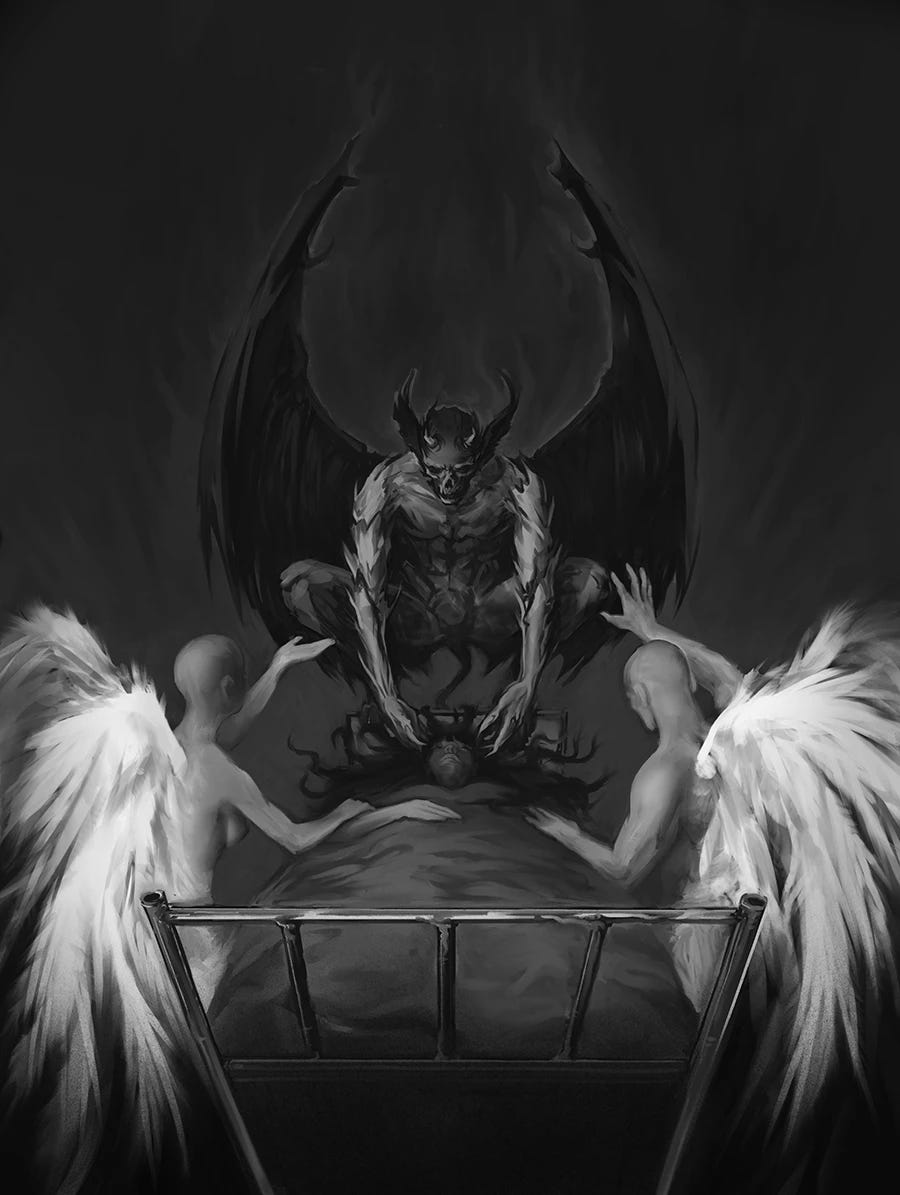
“The light shines in the darkness, and the darkness has not overcome it.” — John 1:5, NKJV
Dear friends,
As we await the Blessed Hope of Christ’s return (Titus 2:13), the Bible calls us to shine as lights in a darkening world (Philippians 2:15). Part of that mission is understanding the spiritual forces we battle (Ephesians 6:12).
Today, we explore a provocative yet biblically grounded thesis: the “unclean spirits” of the New Testament may not be fallen angels, but the disembodied spirits of the Nephilim, the hybrid offspring of Genesis 6:1-4. This view, rooted in Scripture and early Jewish thought, equips us to stand firm, proclaim the gospel, and prepare for the King’s coming (Revelation 22:20).
Like most of you, I’ve learned resilience through trials, and trusting God’s deliverance (Psalm 30:2). Let’s dive into His Word, testing all against its truth (Acts 17:11), and find hope in Christ’s victory (Colossians 2:15).
---
Why This Matters
The Nephilim-spirits hypothesis isn’t academic trivia—it sharpens our spiritual warfare, deepens our gospel urgency, and anchors our hope in Christ’s imminent return (1 Thessalonians 4:16-17). By distinguishing fallen angels from demons, we see God’s sovereign plan unfold through dispensations, preserving His promises for Israel and the Church (Romans 11:29).
Candlefish Ministries exists to proclaim Christ alone (John 14:6), disciple believers (Colossians 2:6-7), and prepare for His return (Matthew 24:44). Let’s uncover this ancient truth together.
1. The Genesis 6 Enigma
Scripture sets the stage:
“The sons of God saw the daughters of men, that they were beautiful; and they took wives… The Nephilim were on the earth in those days, and also afterward.” — Genesis 6:2, 4, NKJV
· Sons of God (bene ha’elohim): Always divine beings in the Old Testament (Job 1:6; 38:7; Psalm 89:6), not humans, as confirmed by the Septuagint (LXX) and Dead Sea Scrolls.
· Nephilim: From naphal (“to fall”), translated gigantes (“earth-born giants”) in the LXX. They reappear post-Flood (Numbers 13:33; Deuteronomy 2:10-11), tied to tribes like the Anakim.
This unnatural union corrupted humanity, triggering the Flood (Genesis 6:5-7), yet God’s redemptive plan endured through Noah (Genesis 6:18).
Second Temple Insights
While not canonical, 1 Enoch (quoted in Jude 14-15) reflects early Jewish understanding: 200 fallen angels (“Watchers”) married human women, producing violent giants (1 Enoch 7:3-4). After death, their spirits roamed as “evil spirits” (1 Enoch 15:8-12), afflicting mankind.
Jubilees 10:1-13 adds that 10% of these spirits, under a Satanic figure (Mastema), cause deception and oppression—mirroring New Testament demons. Tested against Scripture (Acts 17:11), these texts clarify Genesis 6’s supernatural scope.
2. Demons in the New Testament
Jesus’ encounters reveal distinct demonic traits:
· Seeking bodies: Unclean spirits crave hosts (Luke 11:24-26), unlike angels.
· Dreading the Abyss: They fear imprisonment (Luke 8:31), aligning with the Watchers’ chains (2 Peter 2:4; Jude 6, Greek tartaróō for Tartarus).
· Unique terms: Always daimónia or pneúmata (“spirits”), never ángeloi (“angels”).
· Limited knowledge: They’re silenced by Jesus (Mark 1:34), unlike angelic intellect.
Paul’s cosmic hierarchy (Ephesians 6:12) distinguishes “principalities/powers” (fallen angels), “rulers of darkness” (Watchers), and “spiritual forces” (including Nephilim spirits), tying to God’s allotment of nations (Deuteronomy 32:8, LXX).
3. Early Church vs. Medieval Shift
Early Christians like Justin Martyr (c. 150, Second Apology 5) and Irenaeus (c. 180, Against Heresies 4.36.4) saw demons as Nephilim spirits, distinct from bound Watchers.
Augustine’s later view (c. 412, City of God 15.23), equating all demons with fallen angels, dominated Western theology, possibly to counter Gnostic excesses. Yet Scripture, not tradition, is our anchor (2 Timothy 3:16). Jude’s use of 1 Enoch validates its interpretive weight without canonizing it.
4. Implications for Today
Spiritual Warfare
· Fallen angels: Bound, deceiving at a cosmic level (2 Corinthians 11:14).
· Nephilim spirits: Active, possessing and oppressing terrestrially (Mark 5:1-20).
As Biola’s Talbot School emphasizes, distinguishing Israel from the Church (Romans 11:29) parallels distinguishing angelic from hybrid entities. Our weapon is God’s armor (Ephesians 6:10-18), not rituals.
End-Times Urgency
In our dispensational framework, the Church awaits the pre-Tribulation Rapture (1 Thessalonians 5:9; Revelation 3:10). Revelation 9:1-11’s locust-like hybrids may hint at Nephilim-like entities in the Tribulation (Daniel 9:27), resolved by Christ’s premillennial return (Revelation 19:11-16).
Modern Echoes
Genesis 6:4’s “corruptions” suggest genetic tampering, paralleling today’s transhumanism—efforts blending human DNA with artificial means. Some see this as Satanic, defying God’s image (Genesis 1:27). As in Noah’s day (Matthew 24:37), such rebellion invites judgment, but Christ offers salvation (John 14:6).
5. Answering Objections
· Does Isaiah 14:12 make demons fallen angels? No, it describes Satan (Ezekiel 28:12-19), not rank-and-file demons.
· Are Genesis 6’s ‘sons of God’ human? Ancient sources (LXX, Church Fathers) say divine beings; modern human readings reflect bias.
· Does Matthew 25:41 call demons angels? No, it specifies “the devil and his angels” (ángeloi), not daimónia.
· Did giants survive the Flood? Possibly via secondary incursions (Deuteronomy 32:8, LXX) or Noah’s daughters-in-law (Genesis 6:18).
· Is 1 Enoch unreliable? Though non-canonical, Jude 14-15 quotes it, affirming its interpretive value.
6. Conclusion: Shining in the Darkness
The Nephilim-spirits hypothesis aligns with Scripture, distinguishing bound Watchers from roaming demons, and resonates with early Jewish and Christian thought. It calls us to vigilance (Matthew 24:42) and hope in Christ’s cross (1 Corinthians 2:2) and coming (Revelation 22:20).
I’ve faced trials—health crises, losses—yet God’s healing (Psalm 30:2) proves His faithfulness. So too, He overcomes all darkness.
Further Study: Explore Genesis 6:4’s genetic corruption and modern parallels like transhumanism. Michael Heiser’s Demons (2020) offers deeper insight.
Candlefish Challenge: Root out strongholds (2 Corinthians 10:4-5). Abide in Christ (John 15:5) and share His gospel.
Gospel Call: If lost, trust Jesus: “Believe on the Lord Jesus Christ, and you will be saved” (Acts 16:31). Blessed Hope: “The Lord Himself will descend… and thus we shall always be with the Lord” (1 Thessalonians 4:16-17).
What does this view reveal about spiritual warfare? Comment below!
Let There Be Light!
Robert Rousseau
Candlefish Ministries John 1:5
All verses from the NKJV unless noted. Greek terms from Strong’s and Blue Letter Bible.
Sources: Heiser, M.S., The Unseen Realm (2015); Reed, A.Y., Fallen Angels (2005); Boyd, G.A., God at War (1997); Heiser, M.S., Demons (2020).