

Foundations in the Fire:
Why Literal Scripture Still Burns Bright

Foundations in the Fire: Why Literal Scripture Still Burns Bright
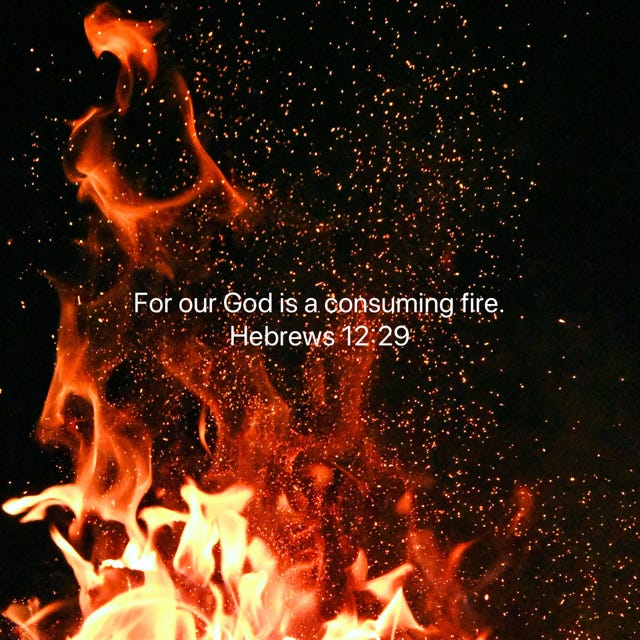
I’ll be honest: there’s something about holding a real, physical Bible that no screen can replicate. I remember the first time I held one that was truly mine—not an app, not a PDF. The leather cover was soft from years of use. The pages carried little curls and nicks, with the faint scent of ink and age. It had weight—not just in my hands, but in my soul. This wasn’t just a book; it was a lifeline. A tangible connection to the God who speaks.
Today, we scroll, skim, and watch summaries. It’s convenient, but convenience often masquerades as devotion. We risk losing the very thing that ignites our faith. The fire of Scripture—the kind that builds conviction, courage, and hope—doesn’t come from pixels. It comes from holding the Word, reading it slowly, and letting it read you. That fire is transformative. It changes everything.
During a season of profound uncertainty—career upheaval, health struggles, deep doubts—I would open my worn Bible and simply read. Psalm 23, the prophecies of Amos, a long-forgotten memorized verse. Every time, a spark. Small at first, then growing into a flame that gave me direction and courage. That’s the “Candlefish fire”: a faith that is alive, personal, and literal, shining brightest in the deepest darkness.
Tyndale’s Legacy: Blood for the Word
This conviction isn’t just mine—it’s written in blood across church history. Men like William Tyndale understood the value of God’s Word in the hands of the people. In 16th-century England, translating the Bible into English was a capital offense. Tyndale risked everything—fleeing authorities, smuggling pages, betrayed by friends—so that ordinary people could read God’s promises for themselves. He was captured, imprisoned, and executed. His final prayer? “Lord, open the King of England’s eyes.”
If Tyndale was willing to die for the literal, accessible Word, what are we willing to risk? Our threat isn’t execution; it’s digital drift. Spiritual numbness. Skimming devotionals without letting them pierce our hearts. Scrolling past promises without letting them sink in.
Hebrews 4:12 (NKJV) reminds us:
“For the word of God is living and powerful, and sharper than any two-edged sword, piercing even to the division of soul and spirit, and of joints and marrow, and is a discerner of the thoughts and intents of the heart.”
This isn’t a metaphor. It’s a reality. God’s Word dissects our motives, equips us for battle, and breathes life into dead places—but it demands our engagement. We must hold it. Read it. Wrestle with it.
Literal Hope: Amos 9:14 and Beyond
This literal engagement is the bedrock of a hope that does not disappoint. Take Amos 9:14 (NKJV):
“I will bring back the captives of My people Israel; they shall build the waste cities and inhabit them…”
This isn’t vague spiritual advice. It’s a literal, historical promise—specific people, a specific land, a specific restoration. Seeing this promise unfold in history—the modern restoration of Israel—is a powerful testament that God’s Word is trustworthy. When we read it literally, it fuels a hope as solid as the ground beneath our feet.
This pattern is repeated throughout Scripture:
· Ezekiel 36:24-28: God gathers His people, cleanses them, and gives them a new spirit.
· Isaiah 62: A celebration of Jerusalem’s literal rebuilding.
These are not abstract spiritual metaphors; they are the granite promises of God, fulfilled in time and history. This literal framework is essential to rightly understanding God’s distinct plans for Israel and for His Church.
Living the Candlefish Fire
Engaging with Scripture literally doesn’t just shape beliefs—it anchors your life. I’ve lived this. Memorizing verses, journaling reflections, discussing passages—these practices turn printed words into a living anchor.
During a severe health crisis, I clung to 2 Timothy 3:16-17 (NKJV):
“All Scripture is given by inspiration of God, and is profitable… that the man of God may be complete, thoroughly equipped for every good work.”
I wrote it down. I memorized it. I repeated it aloud. That verse became a shield. It literally equipped me, just as it promised.
You don’t need a complex system. You just need to engage.
Here’s how to stoke the fire:
· Hold the Book: Keep a physical Bible where you can see it. Underline it. Make notes in the margins. Make it yours.
· Read Aloud: Hear the Word. Your heart processes it differently when it’s spoken.
· Memorize Key Truths: Tuck a verse away each week. Let it become part of your mental fabric.
· Discuss with Others: Share what you’re reading. Faith is communal.
Like Tyndale, we are called to be people of the Book. Our battle isn’t against flesh and blood, but against distraction and spiritual apathy. Choosing to engage with God’s Word literally, personally, and consistently is a radical act of faith. It’s how waste places are rebuilt, both in history and in our hearts (Amos 9:14).
So, grab your Bible. Open it. Read it. Mark it up. Let the Candlefish fire—the light that shines in the darkness—ignite in you and spread to those around you.
Here’s the truth to carry today: God’s Word still burns bright. It still pierces the darkness. And it still calls us to courage, to hope, and to life. Don’t just read it. Hold it. Wrestle with it. Live it.
---
🔥 Let’s Ignite a Chain:
What Bible story or verse has been a “fire” in your life? Share it in the comments. Let’s see how God’s Word is still burning bright today—and start a Candlefish fire chain together.
All Scripture verses are from the New King James Version (NKJV).