

John Calvin

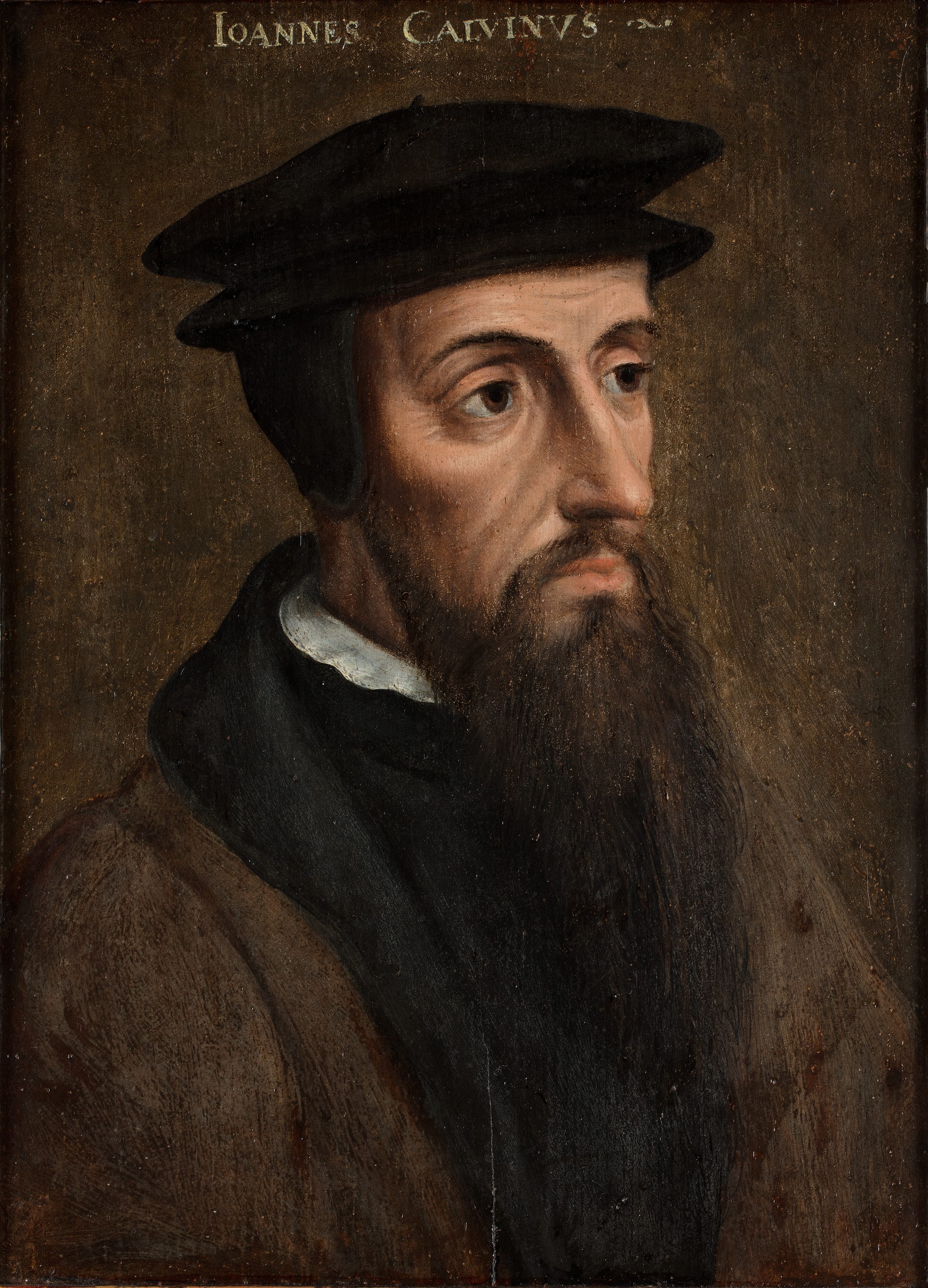
Calvin’s Foundational Error: Blurring the Covenant and Reaching for the Sword
Scripture is not vague about the line between the Old Covenant of Law and the New Covenant of Grace. Hebrews 8:13 declares, “In that He says, ‘A new covenant,’ He has made the first obsolete.” That is not a software update; it is a total shift in God’s administrative dealings with humanity.
The apostle Paul reinforces this clarity. The Law was a “tutor to bring us to Christ, that we might be justified by faith. But after faith has come, we are no longer under a tutor” (Galatians 3:24–25). He goes further: “Christ is the end of the law for righteousness to everyone who believes” (Romans 10:4).
From a dispensational viewpoint, this is non-negotiable:
Israel under the Law was one distinct administration—an earthly theocracy with a national covenant and civil sanctions.
The Church under Grace is another—a spiritual body, the Bride of Christ, scattered among the nations.
You cannot surgically remove covenant-specific death penalties from Israel’s national constitution and bolt them onto the Church in the age of grace.
Yet this is precisely what John Calvin did.
Theological Smuggling: How Calvin Kept the Law’s Penalties
To get around the clear biblical distinction, Calvin invented a tripartite division of the Law—moral, civil, and ceremonial. He argued that while the ceremonial and civil codes were fulfilled, the “moral law” (including its attached penalties) remained in force.
That move was theological sleight of hand.
By reclassifying commands like Leviticus 24:16 (“whoever blasphemes the name of the LORD shall surely be put to death”) as “moral,” he smuggled Old Covenant death sentences into the New Covenant era. He flattened dispensational distinctions, merged Israel and the Church into a single amorphous “people of God,” and functionally declared Geneva a “Christian Israel.” Anyone who crossed his theology became, in his system, a covenant-breaker deserving execution.
That is more than sloppy exegesis; it is covenant theft. Calvin hijacked Israel’s mail and used it to sign death warrants in the Church age.
The Rejection of the New Covenant Ethic
This covenantal error birthed a practical heresy that collided head-on with the commands of Christ.
Jesus told His followers:
“Love your enemies, bless those who curse you, do good to those who hate you.”
—Matthew 5:44
When His disciples wanted to call down fire on a Samaritan village, Jesus rebuked them:
“For the Son of Man did not come to destroy men’s lives but to save them.”
—Luke 9:56
The apostolic pattern for ministry is just as clear. A servant of the Lord must be:
“Gentle to all, able to teach, patient, in humility correcting those who are in opposition.”
—2 Timothy 2:24–25
Gentle, not brutal.
Patient, not punitive.
Correcting in humility, not crushing with power.
Trusting God to grant repentance, not the magistrate to enforce conformity.
Calvin rejected that model in practice. He didn’t simply refute heretics; he aimed to destroy them. He treated the civil sword as God’s chosen instrument to guard his system, and he baptized its brutality with Old Testament texts ripped from their covenant context.
Geneva in Practice: Theocracy Masquerading as Reformation
Geneva under Calvin was not a showcase of gospel liberty; it was a religious police state.
The Ecclesiastical Ordinances established the Consistory, a church court with enormous power to discipline citizens. While the Consistory could not execute directly, its spiritual condemnations flowed seamlessly into civil penalties. Calvin stood at the junction where pulpit, court, and magistrate met.
The cases of Jacques Gruet and Michael Servetus expose the logic of his system.
Jacques Gruet opposed Calvin, leaving a letter in his pulpit calling him a hypocrite. For that offense he was arrested, tortured for a month, and beheaded. His house was destroyed; his wife was driven out.
Michael Servetus, a heretic by any orthodox measure, became the system’s most notorious victim. Calvin had already written that if Servetus came to Geneva, “he would not leave alive.” When Servetus arrived, he was arrested, tried on 38 counts of heresy, and burned at the stake. Calvin’s only “mercy” was a failed request that the execution be by beheading instead.
This is not the defense of sound doctrine. It is premeditated, theologically justified killing. When your idea of compassion is arguing for a quicker method of execution, your heart has already abandoned the Sermon on the Mount.
A Dispensational Verdict: A System Rotten at the Root
This is not a matter of “rough edges” on an otherwise sound system. From a dispensational standpoint, Calvin’s actions expose a framework that is rotten at the root because of two fatal errors:
The Conflation of Israel and the Church
By treating Geneva as a new theocracy, Calvin illegitimately reactivated the civil sanctions of the Mosaic Covenant—sanctions given to one nation, in one land, under one covenant—not to the global Church in this Dispensation of Grace.The Rejection of New Covenant Ministry
Paul contrasts the old and new:
“…who also made us sufficient as ministers of the new covenant, not of the letter but of the Spirit; for the letter kills, but the Spirit gives life.”
—2 Corinthians 3:6
In this age, God has “committed to us the ministry of reconciliation” (2 Corinthians 5:19). We are ambassadors, not executioners—pleading with sinners, not demanding their blood.
Any theology that needs jail cells, torture racks, and stakes to protect itself is not apostolic Christianity. It is authoritarianism with a few verses taped to the front.
Conclusion: Stop Bowing to Geneva
It is long past time to stop treating John Calvin as an untouchable hero. Questioning his actions is not an attack on the “doctrines of grace”; it is a defense of the New Covenant itself.
We can acknowledge his exegetical strengths without canonizing his conduct. The standard is not Institutes of the Christian Religion; the standard is the rightly divided Word of God. Judged by that standard—honoring the difference between Law and Grace, Israel and the Church—Calvin’s Geneva does not shine as a model. It stands as a warning.
The remnant in these last days is not called to resurrect Geneva, rebuild theocracies, or flirt with “Christian” state power. We are called to preach the gospel, love our enemies, and trust the Holy Spirit—not the state—to convict the world of sin.
We are not under Moses.
We are not under Geneva.
We are under Christ in this present Dispensation of Grace.
Measured by that standard, John Calvin does not stand as a hero beside the apostles. He stands as a solemn caution of what happens when brilliant theology refuses to bow to the gentle boundaries of the New Covenant—and reaches for the sword instead of the cross.
Thank God, all doctrine will be gone soon. The Messiah King has no use for doctrines of man.
As a former Catholic, I find the most repugnant example of Calvinist theology is the idea of “limited atonement.“ In other words, Jesus did not die for all human sin for all time. He died only for those people who God knew would embrace his son. This not only exposes Calvinist predestination as mechanistic. It turns God into a sadist.
Jesus had to die for all human sin for all time for several reasons
1. All of humanity needed the opportunity to embrace Jesus‘s atoning sacrifice as their own redemption. That doesn’t mean that everybody is saved. That does mean God offers those created in his *free* image the choice about what to do about the work his son performed on their behalf.
2. All of non-human creation needed to be redeemed, as well. Otherwise, why would we have a new heaven and a new earth in the future? As the agent through whom God the father created the universe, Jesus is the perfect party to redeem creation. That does not argue for a modernness, environmentalist reinterpretation of the gospel. Such reinterpretations involve questionable science and actually border on paganism.
“Limited atonement“ for the Calvinist serves the same purpose as the doctrine of purgatory for the Catholic. Both are determined to limit the comprehensive nature of Christ’s sacrifice in some way. Purgatory limits it in terms of sin. Limited atonement, restricts it in terms of people. Both not only deny the gospel, but both are blasphemous.