

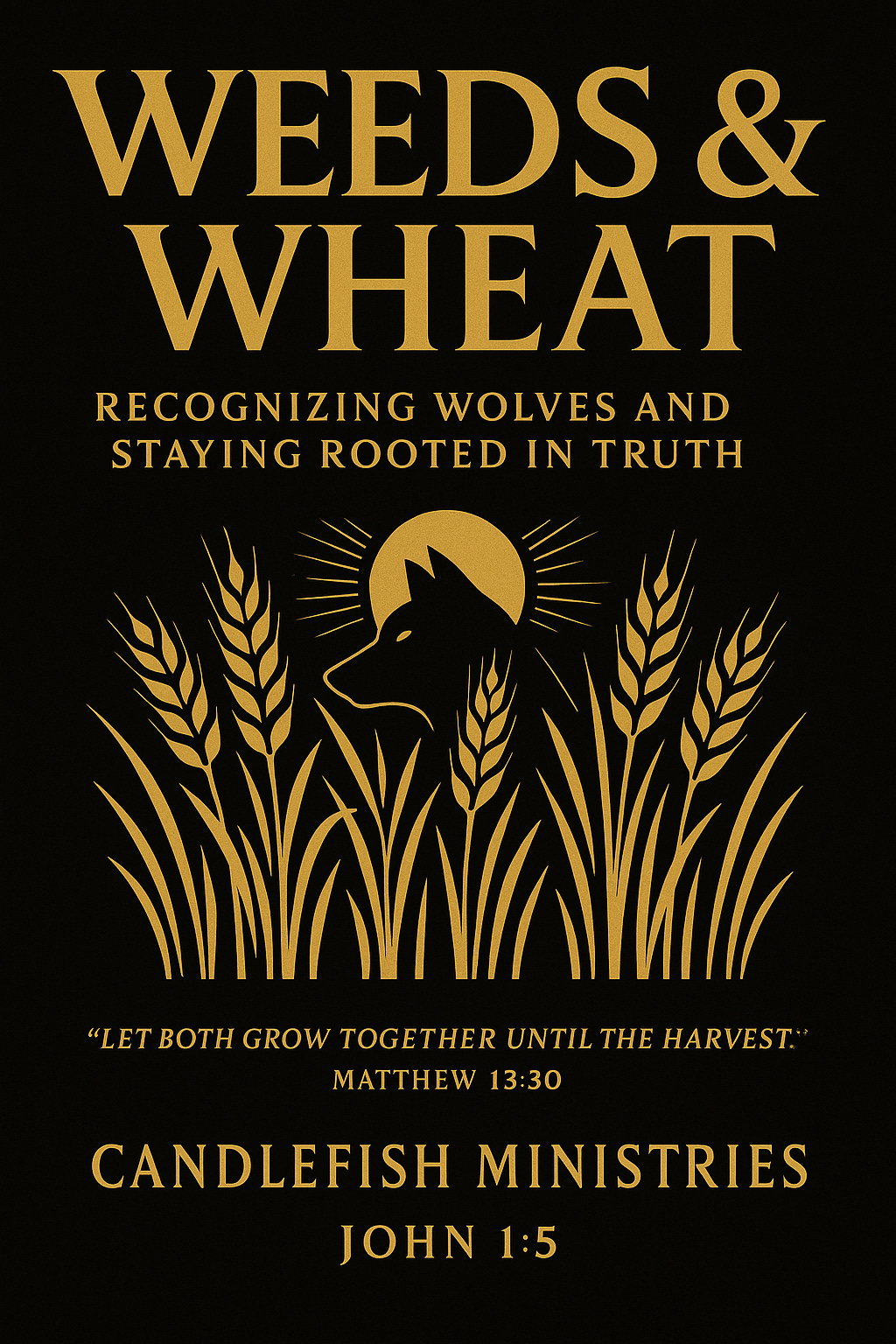
Weeds & Wheat: Recognizing Wolves and Staying Rooted in Truth

Weeds & Wheat: Recognizing Wolves and Staying Rooted in Truth
Text: Matthew 13:24–30, 36–43 (NKJV)
Big idea: The kingdom advances in a mixed field. Until Christ returns, genuine disciples and counterfeits will grow side by side. That reality doesn’t paralyze the church; it clarifies our posture—discernment without panic, vigilance without vengeance, obedience without obsession.
“The kingdom of heaven is like a man who sowed good seed in his field; but while men slept his enemy came and sowed tares among the wheat…” (Matt. 13:24–25)
What Jesus’ Parable Teaches (and Doesn’t)
Field = the world. Jesus is explicit (13:38). The parable explains why good and evil coexist under God’s patient rule.
Judgment belongs to the Lord. Angels—not activists—will finally sort wheat from weeds (13:41–43).
This is not a pass on church discipline. Patience with the world does not cancel Matthew 18:15–17, Titus 3:10, or 1 Corinthians 5. We correct what is clear and local, but we refuse a crusading spirit.
Recognizing the Weeds and Protecting the Wheat
Scripture gives reliable markers for wolves and false workers:
Twisting God’s Word—distorting the gospel, adding works, or wrenching texts from context (2 Pet. 3:16; Gal. 1:8–9; Jude 4).
Self-exalting motives—greed, platform-chasing, domineering style (Titus 1:7–11; 1 Pet. 5:2–3).
Sowing division—fracturing Christ’s body with controversies and party spirit (Rom. 16:17–18; Titus 3:10).
Predatory patterns—preying on the weak, especially through sensuality or flattery (Acts 20:29–30; 2 Pet. 2:1–3).
Pull-quote:
“Protection for the church comes through faithful teaching, persistent prayer, accountable leadership, and a community steeped in Scripture.” (Titus 1:9; Col. 3:16; Acts 20:28)
Practices That Keep Believers Rooted
Stay deeply in the Word. Read, meditate, and test every claim by Scripture (Acts 17:11; 1 Thess. 5:21).
Submit to qualified, humble elders. Christ guards His flock through shepherds who hold fast the faithful word (Titus 1:5–9; Heb. 13:17).
Walk in the Spirit. Dependence, not bravado, produces discernment and holiness (Gal. 5:16–25).
Pray for wisdom and courage. Ask for both tender hearts and steel backbones (Jas. 1:5; Eph. 6:18–20).
How Matthew 13 Shapes Our Posture
Patience and trust. The enemy’s work is real, but the harvest is certain. We refuse alarmism and spiritual cynicism.
Pull-quote:
“True believers shine not by chasing every error, but by remaining rooted in Christ, abounding in love, and walking steadfastly in truth.” (Phil. 1:9–11; Col. 2:6–7)
As Wheat, We Aim To:
Live humbly, obediently, and blamelessly in a crooked generation (Phil. 2:15).
Maintain unity and charity without sacrificing clarity (Eph. 4:1–6, 15).
Focus on faithful, local obedience rather than trying to uproot every weed on the horizon (Mic. 6:8; 1 Thess. 4:11–12).
Encouragement and Charge
Jesus promised, “I will build My church, and the gates of Hades shall not prevail against it” (Matt. 16:18). He is both Sower and Judge. Our part is plain:
Stand firm. (1 Cor. 16:13)
Watch carefully. (Acts 20:28–31)
Walk humbly. (Mic. 6:8)
Guard the truth. (2 Tim. 1:13–14)
Shine in love. (John 13:34–35; Phil. 1:9)
Entrust judgment to God. (Matt. 13:30; Rom. 12:19)
Key takeaway:
Your role as wheat is to remain faithful, love well, and trust God with the harvest.
Memory Verse
“Let both grow together until the harvest, and at the time of harvest I will say to the reapers, ‘First gather together the tares and bind them in bundles to burn them, but gather the wheat into my barn.’” — Matthew 13:30, NKJV
Quote:”Focus on faithful, local obedience rather than trying to uproot every weed on the horizon.” (Mic. 6:8; 1 Thess. 4:11–12).
Amen.
I love that you placed a memory verse at the end.