

Were the Apostles Really “Uneducated”? A Better Reading of Acts 4:13

Were the Apostles Really “Uneducated”? A Better Reading of Acts 4:13
By Robert Rousseau,
Candlefish Ministries John 1:5
“The light shines in the darkness, and the darkness has not overcome it” (John 1:5, NKJV).
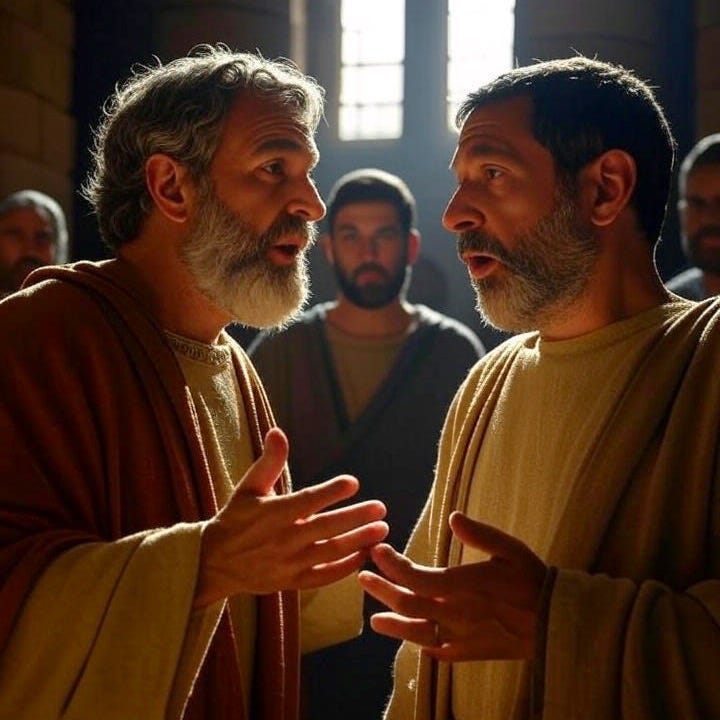
At Candlefish Ministries, we proclaim Christ’s truth in a world of spiritual midnight, equipping believers for the Blessed Hope (Titus 2:13). As a Marine Corps veteran, I’ve faced trials—health crises where God’s healing was my anchor (Psalm 30:2)—teaching me that competence comes from God’s call, not credentials. In Acts 4:13, the Sanhedrin marveled at Peter and John, calling them “uneducated, common men” yet astonished at their boldness, noting they “had been with Jesus.” Were the apostles illiterate fishermen, or is there more to the story? How does their example empower your calling in 2025? Share below!
The Cliché: Illiterate Fishermen?
The sermon trope paints the apostles as simpletons outwitting Jerusalem’s elite, echoing God’s choice of the “foolish” to shame the wise (1 Corinthians 1:27). In 2025, this view persists on platforms like X, where skeptics and some Christians caricature the apostles as unlearned, implying their success was purely miraculous. Catholic apologists (e.g., Trent Horn’s The Case for Catholicism, 2017) lean on this to elevate ecclesiastical authority, suggesting untrained apostles relied on tradition.
This sells the apostles short. Acts 4:13’s Greek terms—agrammatoi (“unlettered”) and idiōtai (“commoners”)—don’t mean illiterate or ignorant. Luke’s point, as Charles Ryrie notes, is that God’s authority bypasses human pedigrees (Ephesians 2:8-9). The apostles’ power came from Christ (John 15:5), not rabbinic diplomas, offering hope for believers awaiting His return (Revelation 22:20).
What the Greek Really Says
Acts 4:13 states: “Now when they saw the boldness of Peter and John, and perceived that they were uneducated (agrammatoi) and common (idiōtai) men, they were astonished. And they recognized that they had been with Jesus” (NKJV).
• ἀγράμματοι (agrammatoi): “Without letters,” meaning no formal rabbinic training under a Gamaliel (Acts 22:3). Not illiteracy, but lack of elite schooling.
• ἰδιῶται (idiōtai): “Private persons” or non-specialists, not “idiots.” They were outside the Sanhedrin’s scholarly class.
The Greek parrhēsia (“boldness”) highlights Spirit-empowered speech (Acts 4:8). As J. Vernon McGee might say, “These weren’t dummies—they were discipled by the Master!” Their authority? Time with Jesus (John 1:14).
Ancient Literacy: A Spectrum
Modern minds see literacy as binary, but the first century was nuanced:
• Functional Competence: Synagogue life immersed Jews in Scripture (Deuteronomy 6:7-9). Boys memorized Torah; Peter and John likely read basic Hebrew (Luke 4:16).
• Scriptural Fluency: Weekly Torah readings (Acts 13:15) gave oral mastery. The apostles cited Psalm 16 and Joel 2 fluently (Acts 2:16-21, 25-28).
Lacking a Pharisaic degree didn’t mean ignorance. Richard Bauckham (Jesus and the Eyewitnesses, 2006) notes oral cultures prioritized memory, equipping apostles for preaching (2 Timothy 2:15). In 2025’s X debates on biblical reliability, this fluency refutes the “uneducated” stereotype.
Galilee: No Backwater
The “hillbilly fishermen” cliché misrepresents Galilee:
• Commercial Hub: The Sea of Galilee was a trade nexus, per Ben Witherington III (The Acts of the Apostles, 1998). Fishermen like Peter and Andrew owned boats, hired crews (Mark 1:20), managing volatile markets—skills of small-business owners.
• Multilingual Context: Aramaic at home, Hebrew in synagogues, Greek in trade. Selling fish to Greek-speaking merchants required functional Greek, preparing apostles for global mission (Matthew 28:19-20).
Galilee’s diversity—Roman roads, Jewish villages, Hellenistic cities—honed practical intelligence, fitting dispensationalism’s view of God’s preparation for the Church Age (Ephesians 3:2-6).
Occupations of Competence
The apostles’ trades reveal savvy:
• Fishermen (Peter, Andrew, James, John): Managed boats, labor, markets (Luke 5:7).
• Matthew (Tax Collector): Handled bilingual records, Roman taxes (Matthew 9:9).
• Simon (Zealot): Navigated political networks (Luke 6:15).
These weren’t fools but men with practical wisdom, sanctified by Christ (1 Corinthians 1:30). In 2025, when credentials dominate, their example liberates: God uses real-world skills for eternal impact (Colossians 3:23).
Luke’s Point: Christ Over Credentials
Luke, a meticulous historian (Luke 1:1-4), highlights God’s power. Acts 4:13’s astonishment isn’t about ignorance but authority: “They had been with Jesus.” Three years with the Word made flesh (John 1:14) trumped rabbinic schools. The Spirit’s filling (Acts 4:8) enabled bold preaching (Joel 2:28), preparing the gospel’s spread (Acts 1:8). Chuck Smith’s practicality resonates: “God doesn’t call the qualified; He qualifies the called.”
A Marine’s Perspective: Competence in Crisis
As a Marine, I’ve seen competence shine beyond credentials. Corporals with high school diplomas outmaneuvered PhDs in crises, relying on training and grit. My health crisis taught me God’s faithfulness (Psalm 30:2) equips beyond degrees. The apostles mirror this: ordinary men, hardened by life, transformed by Christ, turned the world upside down (Acts 17:6). In 2025’s chaos—economic shifts, X debates—their example calls us to serve with what we have (1 Peter 4:10).
Implications for Today
1. Skills as Ministry: Your job—nurse, teacher, mechanic—is God’s platform (1 Corinthians 10:31).
2. Formation Over Degrees: Time with Jesus in His Word (Psalm 119:105) trumps titles.
3. Body of Christ: Theologians and tradesmen unite (1 Corinthians 12:12-14).
4. Blessed Hope: Awaiting the Rapture (1 Thessalonians 4:16-17), serve boldly (Matthew 25:21).
Gospel Invitation
Friend, credentials don’t save—Christ does: “All have sinned” (Romans 3:23). “The gift of God is eternal life in Christ Jesus” (Romans 6:23). “Confess… and believe… you will be saved” (Romans 10:9).
Trust Him today (John 3:16), your true qualification (Colossians 1:12).
Discussion Prompt
How do the apostles’ practical skills inspire your service in 2025? Does Acts 4:13 challenge the “illiterate fishermen” cliché? Share charitably below!
Quick Resources
• Acts 4:13; 1 Corinthians 1:27; Psalm 119:105; Romans 10:9.
• Bauckham, Jesus and the Eyewitnesses (2006); Witherington, The Acts of the Apostles (1998).
Conclusion: Ordinary People, Extraordinary Mission
The apostles weren’t illiterate fools but scripturally fluent, practically savvy men transformed by Christ (John 15:5). Their credential? “They had been with Jesus” (Acts 4:13). In 2025, amid X’s debates and cultural shifts, you don’t need a title—just a heart for Christ (2 Timothy 2:15).
Candlefish Challenge:
• Identify a skill (organizing, encouraging, fixing).
• Pray to use it for God’s glory (James 1:5).
• Serve your church this week (1 Peter 4:10). Blessed Hope: “The Lord Himself will descend… and thus we shall always be with the Lord” (1 Thessalonians 4:16-17).
In Christ and for His coming, Robert Rousseau Candlefish Ministries “The light shines in the darkness, and the darkness has not overcome it.” (John 1:5)
Subscribe to “Candlefish Ministries John 1:5” for truth, prophecy, and gospel.
In Christ,
Robert Rousseau
Candlefish Ministries John 1:5
All verses from the NKJV unless otherwise noted. Sources: Bauckham, R., Jesus and the Eyewitnesses (2006); Witherington, B., The Acts of the Apostles (1998); Ryrie, C.C., Basic Theology (1986). Tags: #Apostles #Acts4 #SolaScriptura #CandlefishMinistries #BlessedHope