

Writing as Sanctification:
Abiding in Christ's Finished Work

Writing as Sanctification: Abiding in Christ's Finished Work
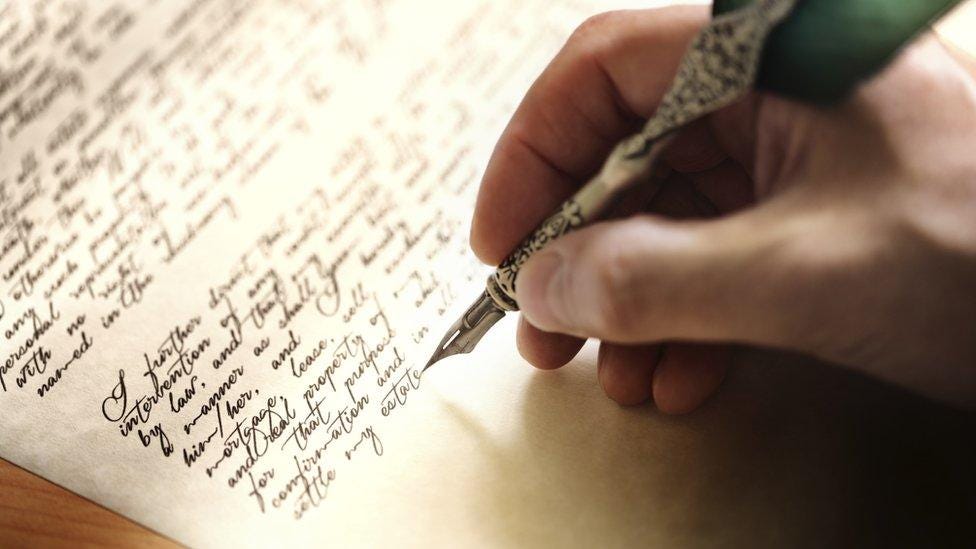
I can still feel the grooves left by a cheap ballpoint pen in a teenager’s hand. I filled spiral-bound notebooks not with dreams, but with dread—purging a pain I couldn’t yet name, one ink-stained page at a time. Back then, writing was a kind of bloodletting. A desperate, visceral attempt to drain the poison from my system before it could ruin me. I was convinced that if I could just trap the chaos inside me within the confines of a sentence, I could finally control it.
Those specific ghosts don’t haunt the page directly anymore. They’ve grown older, wiser, opting for subtler disguises. The stories I tell now wear different masks—metaphors stretched thin over familiar aches, theological essays that orbit old wounds without ever naming their coordinates. I’ve called this growth. I’ve called it maturity.
But on some still nights, the cursor blinking on a blank screen feels eerily familiar. It whispers a quieter, more unsettling question: Have I truly moved forward, or have I simply learned to circle the same pain with better syntax and a more sophisticated vocabulary? In that honesty, the Holy Spirit offers the true diagnosis. This was never merely a literary pursuit. It has always been a spiritual one. The fundamental struggle isn’t to name the chaos, but to surrender it to the One who spoke light into the void and calms raging seas with a word.
---
From Survival to Surrender: A Shift in Command
There is a peculiar humility in realizing that your oldest coping mechanisms still fit. You assume two decades of life and faith would have rusted shut that emergency hatch for good. Yet, when the pressure drops and the air grows thick, my fingers still find their way to the keyboard with the same old desperation—the same need to carve order from the mess.
The tools are undeniably sharper. The theology is sound, grounded in the inerrant Word and a Biola education. The voice is steadier, tempered by a Marine’s discipline and a survivor’s gratitude. But the human compulsion remains. The difference between that frantic boy and the man I am today is not the absence of the struggle; it is the presence of the Savior.
The young man who wrote to outrun his ghosts was building a fragile raft, launching it into a stormy sea. The man writes today from the immovable, steadfast Rock that is higher than I (Psalm 61:2, NKJV). Growth in Christ is not a linear path to a pain-free life; it is the daily, often messy, process of being conformed to His image (Romans 8:29, NKJV). True healing does not mean abandoning the rituals that once kept you alive; it means surrendering them to Christ for His sovereign use. What was once a tool for solitary survival becomes a weapon in the hands of the Spirit—not to fight my ghosts in my own strength, but to proclaim the total victory of the One who has already disarmed them at the cross (Colossians 2:15, NKJV).
My pages are not clean. They are a testament to the ongoing battle—covered in erasures, revisions, moments of Spirit-led clarity, and the faithful confusion that drives me back to my knees. This is the beautiful, difficult work of sanctification. But it is built upon the unshakable, perfect foundation of justification. My healing is incomplete, but my salvation is eternally secure. My understanding is partial, but my Redeemer lives, and He holds the keys to death and hell (Job 19:25; Revelation 1:18, NKJV).
---
A Letter to the Ghosts
So tonight, I think of that furious, grieving boy. I think of the ghosts he tried to pin to the page. And I wish I could tell him that the raft he was building from verbs and vows would not be lost at sea. I wish I could tell him it would, by God’s relentless grace, eventually land upon the only true Foundation. I wish I could tell him that the chaos he felt roaring in his heart would not have the final word, because the eternal Word became flesh and dwelt among us (John 1:14, NKJV). His name is Jesus. He is the light that shines, and the darkness within us—and around us—has not, and will not, ever overcome it (John 1:5, NKJV).
---
Biblical Anchors for the Soul in Process:
· The Healer of Our Deepest Wounds: “He heals the brokenhearted and binds up their wounds.” (Psalm 147:3, NKJV)
· The Promise of Completion: “being confident of this very thing, that He who has begun a good work in you will complete it until the day of Jesus Christ;” (Philippians 1:6, NKJV)
· The Certainty of Our Hope: “And God will wipe away every tear from their eyes; there shall be no more death, nor sorrow, nor crying. There shall be no more pain, for the former things have passed away.” (Revelation 21:4, NKJV)
---
Your Reflection Prompt
Find an old piece of your own writing—something raw and unpolished from a season of struggle. Read it not with the judgment of your present self, but with the grace of the God who saw you then. Where do you now see evidence of His protection, even in the midst of the pain? How has He sovereignly used even your deepest struggles to shape you for His purpose and glory? (Romans 8:28, NKJV)
---
This is more than writing. It is a living portrait of our sanctification.
It is unfinished work, happening securely atop Christ's finished work.
It is a testament to the Great Physician. The healing journey continues, but the cure was irrevocably secured at the cross, and our final restoration is guaranteed at His return.
Thank you for abiding in this light with me.
Let there be light.
—Robert Rousseau Candlefish Ministries “The light shines in the darkness…” (John 1:5)
---
All Scripture from the Holy Bible, New King James Version.
You peel back the layers of your heart beautifully while encouraging us to do the same. Thank you from one work in progress servant to another.
Beautiful artist, brother. It resonates with me, deeply.