

My Brother
Some Late Night Thoughts

My Brother
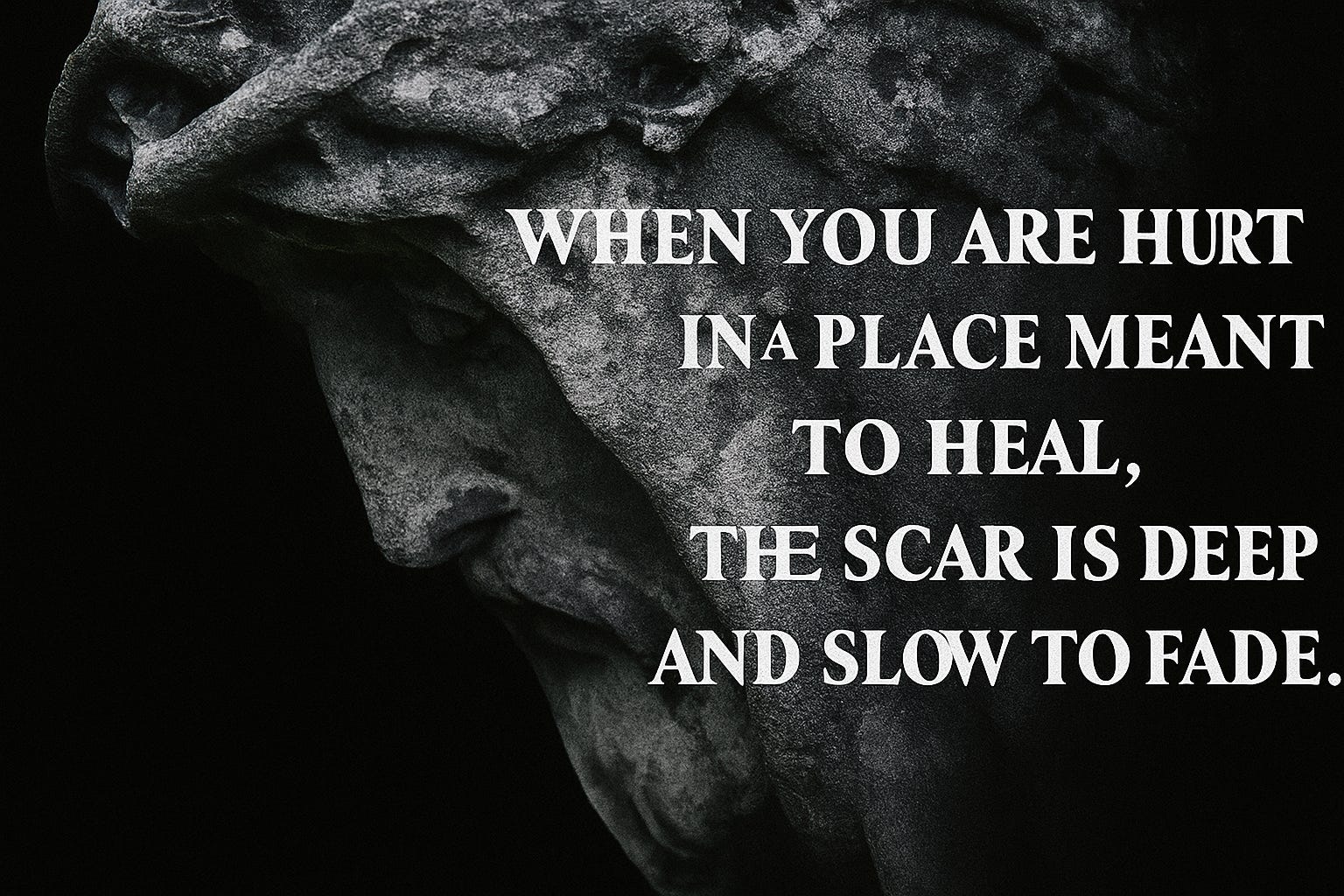
My brother was away at Catholic seminary when I was born in 1966.
By the time I could walk, he had dropped out, enlisted in the U.S. Marine Corps, and found himself in the jungles of Vietnam.
He served two tours.
When he came home, something inside him was gone. He had no use for religion or ritual. Like many who returned from that war, he turned instead to the East — to mysticism, to philosophies that promised silence where the world had screamed too long.
Years later, I asked him what had happened back at seminary — the place that was supposed to form him for the service of God.
He looked at me for a long moment and said quietly, “That place was worse than a San Francisco bath house.”
It wasn’t said in bitterness but in grief. Whatever faith he had gone in with had not survived the experience.
And tragically, his words weren’t unique. Even Pope Francis, in a moment of brutal candor, once spoke of “too much faggotry in the seminaries.” Crude as that word is, the point was clear — there is rot where there should be holiness, performance where there should be repentance.
The problem isn’t that sinners end up in seminaries. Of course they do — where else should grace continue its work? The problem is when the sin is celebrated, hidden, or institutionalized. When vice becomes culture, and culture becomes sacred.
My brother saw it for what it was: a system that had lost sight of its own gospel.
And he walked away.
I understand why.
The counterfeit often looks holy until it starts to smell of death.
But that wasn’t Jesus.
It never was.
The tragedy of my brother’s story isn’t that he left the seminary. It’s that he mistook the failure of men for the failure of God.
He saw hypocrisy and thought it meant the absence of truth.
He saw corruption and thought it meant Christ had left the building.
But Christ was never the one behind the masks.
He was the one they locked outside.
I sometimes wonder what would have happened if he’d met Jesus apart from the machinery — the real Jesus, who overturned the tables of the temple not because He hated religion, but because He loved holiness.
“The light shines in the darkness,” John wrote, “and the darkness did not comprehend it.” (John 1:5 NKJV)
That’s what happened at the seminary. The darkness didn’t comprehend the light.
But the light still shines.
And it shines even there — through broken priests, wounded believers, and disillusioned brothers who can’t bring themselves to kneel again.
My brother never went back to church.
But I carry him with me when I write, when I preach, when I look at the next generation of shepherds being formed.
Because somewhere between the seminary and the foxhole, he lost faith in men.
And I want him to know there’s still faith to be found in Christ.
He left a broken institution.
I found a living Savior.
And that’s the difference.
Robert Rousseau
Candlefish Ministries
“The light shines in the darkness, and the darkness did not comprehend it.” — John 1:5
Wow. Thank you for being real. That was fully human in the good sense. And honoring to our King.
The point is the Pastor that fails has consequences. Our job is to follow the leader- Jesus Christ and God. https://open.substack.com/pub/rogergroves/p/when-earthly-preachers-fail?r=5o921z&utm_medium=ios